

A practical guide for employers in West Michigan and beyond: from pre-fair research and targeted advertising to booth design, lead capture and follow-through.
Quick Answer: Recruiters arrive at job fairs hoping the right candidates will find them. The ones who see real results flip that narrative, making sure the right candidates already know who they are and are already interested, before they even walk in the door. This guide covers the full recruiter playbook: from pre-event research and targeted advertising, to booth design and staff training, to lead capture and post-fair follow-through.
Why Most Recruiters Start Too Late
Here’s a scenario that’s probably familiar.
You register for a job fair. You spend money on a banner, some branded giveaways and printed materials. Your team gives up a full day. You have good conversations. You collect names.
Then the week closes. When you follow up, half the candidates have already moved on. The ones who seemed genuinely interested haven’t responded. A few of the resumes you collected clearly came from people with no real interest in your organization, they were just working the room.
The ROI math is discouraging. The effort-to-hire ratio feels off. And next year, the conversation in your HR meeting starts with: “Is it even worth doing the job fair again?”
If your job fair strategy starts on the day of the fair, that’s too late.
LinkedIn’s 2025 Future of Recruiting report found that employers known for delivering on what candidates actually care about — talented colleagues, flexibility, meaningful work — are measurably more likely to make quality hires. That reputation is built long before anyone walks into a job fair. The candidates who arrive with your organization already on their short list made that decision through online research, reviews, and what they found when they asked around. If you weren’t visible in that process, you weren’t on the list.
This guide is about changing that, starting well before the event itself.
Step One: Research the Fair Before You Register
Before you commit budget and staff time to an event, take time to understand the audience that’s going to show up.
Understand the Attendee Demographics
Start by requesting attendee data from the organizer. You’re looking for:
- Breakdown of attendees by field, experience level and education
- Total expected attendance and historical turnout numbers
- What schools, programs or professional organizations are affiliated with the event
- Whether the audience skews toward entry-level, mid-career or senior performance
If the organizer cannot provide this information, look at the event’s past exhibitor lists, social media presence and co-sponsors. The sponsors tell you who’s funding it, and often who has the most to gain from the event.
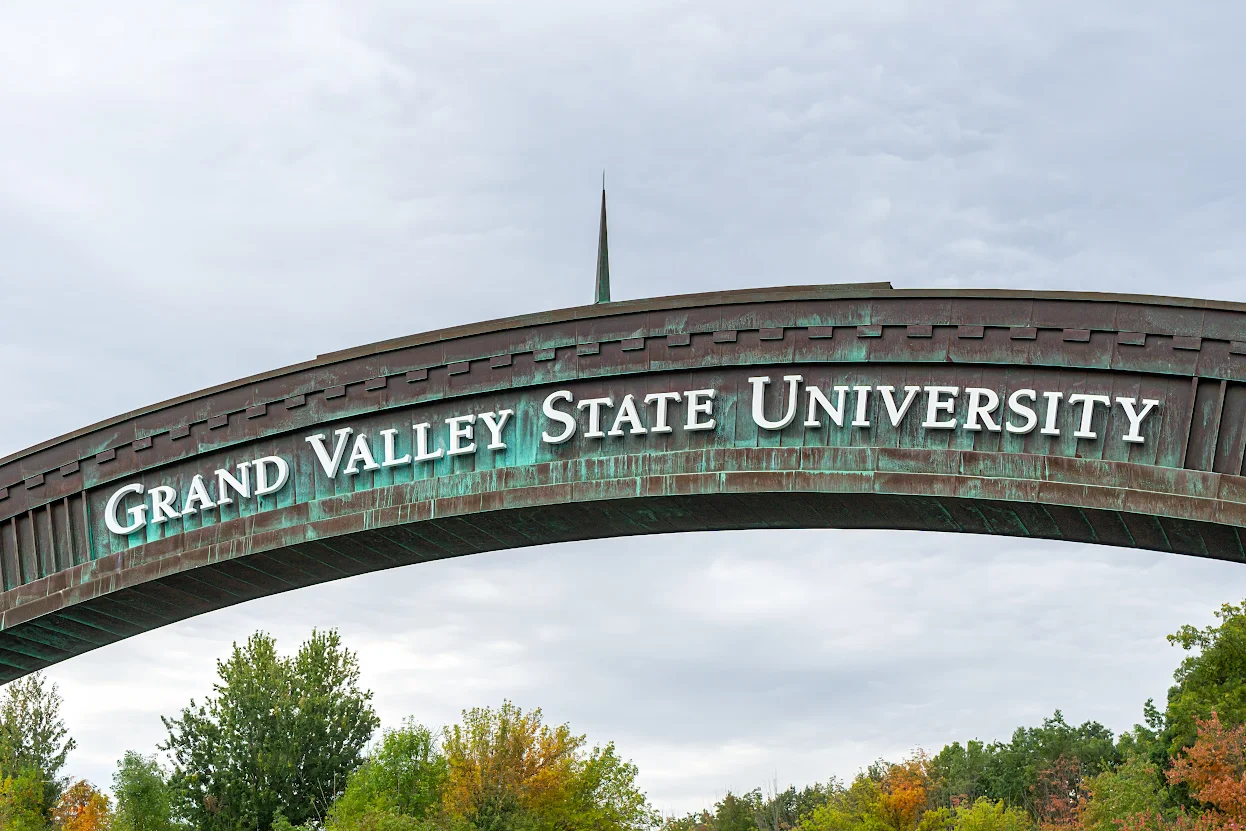
West Michigan has a deep bench of events worth understanding before you commit. Grand Valley State University, Hope College, Davenport University, Ferris State and others each run fairs with distinct attendee profiles. A manufacturing recruiter and a healthcare system should not be working the same list without that context.
The following events recur annually across the Greater Grand Rapids, Holland, Muskegon and Kalamazoo corridor. Dates shift year to year, check each organization’s site for current scheduling.
Recurring Job Fairs in West Michigan
| Event | Host Organization | Typical Timing | More Information |
| GVSU Career Fair | Grand Valley State University | Fall & Winter | gvsu.edu/careers |
| Hope College Career Fair | Hope College Career Development | Fall (October) | hope.edu/careerdevelopment |
| Davenport University Career Fair | Davenport University Career Services | Fall & Spring | davenport.edu/career-services |
| Ferris State University Career Fair | Ferris State University Career Services | Fall & Spring | ferris.edu/career |
| GRCC Career Fair | Grand Rapids Community College | Spring (April) | grcc.edu/careercenter |
| WMU Career & Recruitment Fair | Western Michigan University | Fall & Spring | wmich.edu/career |
| Michigan Works! West Michigan Job Fairs | Michigan Works! West Michigan | Multiple annually | michiganworks.org |
| Ottawa County Job Fair | Ottawa County Michigan Works! | Spring (April/May) | miottawa.org/michiganworks |
| Muskegon Area Employer Fair | Muskegon Community College | Spring | muskegoncc.edu |
| Talent Connect West Michigan | The Right Place Program | Annual (Varies) | rightplace.org |
The Grand Rapids metro posted a 4.0% unemployment rate in December 2025 (Bureau of Labor Statistics), a market that has loosened modestly but remains competitive in key hiring categories. The Right Place’s 2025 State of the Region report, drawn from 600 business retention visits across Greater Grand Rapids, found that 43% of regional companies plan to increase hiring in 2026 — and that reported recruiting difficulty fell to 24% of companies, down sharply from 43% in 2023. Healthcare tells a different story: the Michigan Health & Hospital Association’s 2025 Workforce Survey counted 23,000 open hospital positions statewide, with healthcare support occupations projected to grow 11.7% in West Michigan through 2032. For employers in manufacturing, healthcare, and skilled trades, the competition at a job fair table is real.
Know What Your Target Candidates Care About
Once you know who attends, dig into what they care about. For early-career candidates, that often means growth opportunities, mentorship and culture. For experienced professionals, compensation, leadership access and the quality of the work itself tend to rank higher.
Look at recent industry surveys, LinkedIn data and the questions candidates ask most frequently on platforms like Glassdoor. Build a clear picture of what this audience wants to hear and make sure your messaging at the fair, and outside of it, reflects that.
It is worth knowing who else will be in the room. Not to outmaneuver them, but understanding the competitive landscape helps you get honest about what makes your organization worth choosing. If there are employers who are loud and flashy, you’ll need to learn how to navigate that.
Step Two: Advertise Before, During and After
A lot of employers show up at job fairs and do just fine. But if your results have plateaued or are diminishing, the answer is usually found in what happens before and after the event, not at the booth itself. Pre-fair advertising, targeted outreach and a solid follow-up plan change the quality of the conversations you have on the day.
A well-planned recruitment campaign, one that treats the job fair as the centerpiece of a broader effort and not the whole strategy, is what separates organizations that hire well from ones that collect resumes and wonder why nothing is converted.
Before the Fair: Build Awareness and Anticipation
Start three to four weeks out, run targeted digital advertising to reach candidates likely to attend:
- LinkedIn Ads: Target by job title, field of study, location and graduation year. Promote your presence at the fair and link to a landing page about who you are and what roles you are hiring for.
- Instagram and Facebook: Use geo-targeted ads aimed at the city and surrounding area of the event. Showcase culture, employee stories and the specific roles you are filling.
- Campus and community platforms: If it is a university fair, advertise in the student portal, the career center newsletter or relevant academic department channels. In West Michigan this might mean reaching students through GVSU’s Handshake portal, Hope College’s career center or Michigan Works! West Michigan’s employer channels.
- Event-specific landing page: Create a dedicated page on your careers site for the fair. List the roles you are actively hiring for, introduce the recruiters who will be there, explain what a conversation with you actually looks like. Include a link to pre-register interest or submit a resume prior to the event.
The case for building that page goes beyond SEO. CareerPlug’s 2025 Recruiting Metrics Report, drawing from more than 60,000 small businesses and 10 million applications, found that career-page applicants were four times more likely to be hired than job-board applicants — a 26% hire rate versus 7%. Candidates who find you before the fair, through your own careers page rather than a job board, arrive as fundamentally different conversations.
Publish the landing page three to four weeks out. Include the specific name of the fair in the title and content. Candidates searching for which employers will be at the event will find you before they ever walk in the door.
A short pre-fair blog post, something like “What to Expect When You Meet Us at [Fair Name]” , does the same job and gives candidates one more reason to seek you out specifically.
During the Fair: Keep the Conversation Going Online
Day-of activity amplifies your booth presence and catches candidates who are still making up their minds:
- Post on LinkedIn and Instagram the morning of the fair. Include the event name and your booth location. Make it easy to find you.
- Use short-form video if your team is comfortable with it. A 30-second clip from a recruiter saying “come find us at Booth 14” adds personality and reach without much lift.
- If the event has a mobile app or digital program, treat your profile like a mini landing page. A sharp company description, the roles you’re actively filling and a direct link to apply gives candidates everything they need to seek you out before they reach your booth.
After the Fair: Maintain the Momentum
Candidates who had a good conversation but didn’t commit on the spot often keep researching employers in the days that follow. Staying visible during that window keeps your organization in the mix while they’re still deciding.
- Publish a brief recap post/video within a week. Mention which roles are still open and what is next for interested candidates. Tag the fair by name.
- Retarget anyone who visited your event landing page but did not apply. Digital advertising platforms make this straightforward.
- Update your open roles immediately. Stale listings send the wrong signal. Candidates who receive your follow-up email and find outdated postings on your careers page form a negative impression fast.
- Send a follow-up email to every lead captured at the fair within 24 hours. More on this in the lead capture section below.
Step Three: Design a Booth That Pulls People In
Lead with One Clear, Specific Message
The most common booth design mistake is trying to say too much. A long list of company values, a block of text about your history, a logo the size of a business card: none of it registers in a crowded room.
Instead, lead with one clear message that answers the question every candidate is silently asking: “Why should I stop and talk to you?” That message should be:
- Readable from 15 feet away
- Specific to what you offer, not generic employer-brand language
- Action-oriented or curiosity-provoking
- Supported visually with strong color contrast and minimal clutter
Examples that work: “Never be bored at work again” or “Now hiring. Your first promotion could be in 18 months.” These are specific, credible and interesting. They invite a follow-up conversation.
Getting that message right and translating it into signage, graphics and collateral that hold up in a noisy environment is exactly the kind of work Boileau & Co.’s recruitment marketing team (yes, shameless plug) does for employers in West Michigan. Good design doesn’t just look professional. It does work.
Design for Conversation, Not Display
Your booth layout should encourage candidates to stop and engage, not just grab a flyer and move on. Consider:
- An open, approachable layout with no barrier between your team and the aisle
- A designated standing space where a recruiter can have a one-on-one conversation without it feeling like a sales pitch
- A visual element that invites engagement: a simple question on a whiteboard or a brief video loop on a monitor that shows real employees talking about their work
- A secondary station for lead capture or giveaways that keeps foot traffic moving even when your recruiters are in conversations
Step Four: Train Your Booth Staff to Have Better Conversations
Job fair floors are noisy, literally and visually. Candidates are scanning dozens of booths in a short window. Your booth has only a few seconds to register as worth stopping at. Thankfully, that’s a design problem, and it has a design solution.
The Recruiter Elevator Pitch
Every recruiter at your booth should be able to answer two questions in 30 seconds or less: who are we and why would someone want to work here? The answer should not sound scripted, but it should be practiced.
A strong elevator pitch covers:
- What makes it genuinely different as a place to work
- What the company does, in one plain sentence
- The specific roles currently open
- A direct invitation to keep talking: “What kind of work are you looking for?”
Build the Conversation Around the Candidate
The recruiter’s job at a fair is not to deliver a presentation. It is to have a conversation. That means listening more than talking and quickly steering toward the candidate’s interests, goals and experience rather than a generic overview of the company.
Train your team to lead with questions after the initial pitch:
- “What are you looking for in your next role?” : opens the door to tailored responses
- “What kind of environment do you do your best work in?” : reveals fit and lets you match to culture
- “What is most important to you in choosing where you work?” : surfaces the real decision criteria
- “Have you heard of us before today?” : tells you whether your pre-fair efforts landed and helps you calibrate the rest of the conversation
The cost of getting this wrong compounds quickly. iHire’s October 2025 survey of more than 1,000 active job seekers found that 53% have been ghosted by an employer, and CareerPlug’s 2025 Candidate Experience Report found that 47% of candidates would withdraw from a process due to poor communication alone. A candidate who leaves your booth feeling heard is the beginning of a relationship. One who never hears from you again tells people.
Step Five: Capture Leads So You Can Follow Up
A great conversation that produces no contact information is a missed opportunity. Don’t leave that to chance.
Make it Easy and Worth Their While
Candidates are approached by a dozen employers at every fair. If you want their contact information, earn it. The most effective way to do that is to offer something genuinely worth having in return.
- Prize drawing: A high-value giveaway (a gift card, a tech item or an experience) in exchange for an email address and interest area. Keep the entry form short: name, email and “Which role are you most interested in?” That last field also gives you segmentation data for follow-up.
- Branded swag with a QR code: A well-chosen takeaway item paired with a QR code that links to your careers page or a specific job posting. The swag earns the scan.
- Resume drop with same-day feedback promise: Offer a brief, honest reaction to resumes submitted at the booth. Even a simple “You’d be a strong fit for this role” creates a warm lead.
- LinkedIn connection on the spot: Encourage candidates to connect with the recruiter they spoke with before leaving the booth. This keeps the relationship alive on a platform where future openings will be visible.
Follow Up Within 24 Hours
The follow-up email sent the next morning is the highest-leverage touchpoint in your entire job fair strategy. Candidates wake up to messages from multiple employers. The ones who receive a warm, specific, personal message from a recruiter stand out immediately.
Your follow-up email should:
- Reference something specific from the conversation if possible
- Link directly to the role or roles discussed
- Include a clear, low-barrier next step: “Apply here,” “Schedule a 20-minute call,” or “Learn more about the team”
- Come from a named recruiter, not a generic HR inbox
SMS for Hourly Categories
For roles in manufacturing, healthcare, skilled trades, or any hourly category, consider adding a text to your follow-up sequence alongside email. iCIMS reports SMS messages open at roughly 98% versus 20% for email, with the average person responding to a text in 90 seconds versus 90 minutes. These numbers come from a recruiting software vendor and should be read accordingly — but the directional finding holds across enough sources to take seriously. Independent research from Aptitude Research found that companies using text recruiting were twice as likely to fill positions within the first two weeks and reported a 48% improvement in candidate experience scores.
Step Six: Create Collateral That Does Work After the Fair
Most job fair takeaways end up in a bag, then a drawer, then the recycling bin. The ones that survive are the ones that offer something useful and point the candidate toward a clear next step.
Design Collateral With a Single Purpose
Candidates leave a job fair carrying materials from a dozen employers. The ones that get opened the next morning are the ones that made one clear ask. Decide what yours is before you print anything.
- Apply now: A postcard-sized card with the specific role title, a one-sentence description of why it is a compelling opportunity and a QR code linking directly to the application.
- Meet the team: A one-page profile introducing the team or department the candidate would join, with photos, names and brief quotes about why they like their work. This builds the human connection that makes follow-through more likely.
- Role-specific one-pager: Rather than a generic company brochure, create a dedicated one-pager for each position you are actively recruiting. Include what the work actually involves, what makes someone successful in the role and a direct application link.
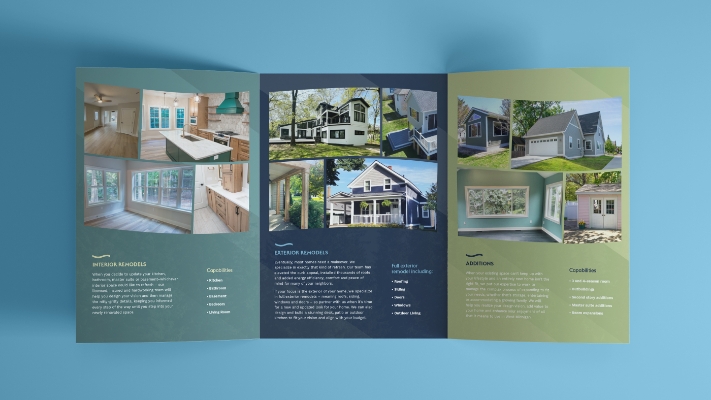
If you’re not sure where to start, Boileau & Co.’s print and event collateral work is built around exactly this challenge, helping employers make materials that actually travel home with candidates instead of getting left on the table.
Step Seven: Use Your Employees as Your Most Credible Voice
Candidates know your careers page was written by your marketing team. They read it, but they don’t fully trust it — and they’ll go looking for a second opinion.
According to Glassdoor research, 86% of job seekers read company reviews and ratings before deciding where to apply. In a market like West Michigan where industries from manufacturing and healthcare to professional services and higher education are all competing for the same talent, your employer reputation online is doing more heavy lifting than most organizations realize.

In the weeks before a job fair, ask employees to share something publicly about their experience at your organization. Keep the ask simple: why they joined, what they are working on that excites them, what they would say to a candidate considering applying. LinkedIn posts, Glassdoor reviews and short videos all aggregate into the picture candidates form of you as an employer.
Authenticity is the point, so you don’t have to over-produce it.
Your recruiters are part of the research too. Candidates will look them up after a good conversation. Make sure there’s something worth finding.
Encourage your recruiting team to post regularly, not just job openings but real content about what they are looking for, what strong interviews look like and what they find meaningful about recruiting for your organization.
How to Get Real ROI From a Job Fair
Job fair ROI has a straightforward formula: quality of hires made, divided by total cost of participation. The problem employers run into is that they are measuring ROI on an investment they only partially made.
SHRM benchmarking data puts the average cost-per-hire in the U.S. at $4,700 with time-to-fill averaging around 44 days. Employers who invest in pre-fair awareness and post-fair follow-through consistently see both numbers improve because better-qualified candidates convert faster and require less back-and-forth.
Better-Qualified Candidates Convert Better
When candidates arrive informed, the conversation changes. They’re not asking who you are. They’re telling you why they want to work there. Those conversations convert. The quality of applicants goes up and the roles fill faster.
The opposite is just as true. Candidates who arrive cold put your recruiters in educator mode. That’s expensive time spent on context that should have been built before the fair. It rarely leads anywhere.
Ask Where Candidates Came From
Ask every candidate the same question after the fair: ‘How did you hear about us and where did you research us before today?’ It sounds simple. It’s not. Over multiple events that single question builds a picture of exactly what’s driving your best candidates to your booth. Pair it with application conversion data and you’ll know, with real confidence, where to invest next time
How to Measure Whether Any of This Is Working
ROI from a job fair is not just “how many resumes did we collect.” That metric rewards volume over quality and misses the full picture. Measure what actually matters.
What You Can Track
- Leads to applications: Of all the contact information captured, how many resulted in a completed application within two weeks?
- Applications to interviews: Of the applications from fair leads, how many advanced to a first interview? This measures the quality of the candidates who stopped by your booth.
- Interviews to offers: How many fair-sourced candidates reached the offer stage?
- Time-to-fill: For roles you were actively recruiting at the fair, did the time to fill improve compared to previous cycles?
- Referral traffic from pre-fair content: Track visits to your event landing page and careers site in the weeks before and after the fair. Growth here signals that your pre-fair content is being found.
- Candidate source data: Ask directly how candidates heard about you and where they did their research
What Is Harder to Pin Down
- Exact attribution when a candidate researched you across multiple platforms before deciding to visit your booth
- The influence of employee social content on candidates who never mention it in follow-up surveys
- Brand impressions built over time that shape perception before any single fair
Track the measurable metrics consistently across multiple events and you will build a real picture of what is working.
Frequently Asked Questions
NACE’s 2024 Student Survey of more than 20,000 students found that career fairs are an effective means of converting connections into jobs. 45% of fair attendees received an interview invitation and 24% received a job offer. Those conversion rates are difficult to match through online channels for early-career and frontline roles. The channel works. The question is whether your organization is working it.
Three to four months for major events. That gives you enough runway to research the audience, build event-specific content, launch advertising and have your booth materials designed and printed without rushing. For smaller, recurring local fairs, a four-to-six week runway can be sufficient if you already have strong careers content in place.
It depends on what is limiting your results. If you are attracting decent volume but struggling with quality or follow-through, the preparation work described in this guide is likely part of the answer. You are not showing up in the research process of the candidates who would be the best fit. Start by auditing what comes up when someone searches for your organization as an employer online. It will show you exactly where you stand before you decide what to do about it.
Focus your limited time on three things: 1) a clear, specific booth message; 2) a simple lead capture process with a same-day follow-up plan; and 3) a landing page for the event with your open roles and recruiter profiles. Those three elements do more work than anything else with the least overhead.
Talking too much about the company and not enough about the candidate. The recruiters who consistently build the best pipelines from job fairs are the ones who spend most of the conversation asking questions and listening. A candidate who feels genuinely heard at your booth will remember you.
With specificity and warmth. Large employers often compete on scale and brand recognition. Smaller and mid-size employers, which can make up a significant share of the West Michigan economy, can win on the quality of the conversation, the clarity of the opportunity and the personal follow-through. A candidate who has a genuine 10-minute conversation with your recruiter and receives a personalized email the next morning will remember that longer than a glossy booth from a company that never followed up.
Treating it as a one-time event rather than an ongoing practice. Employers who consistently see strong results from job fairs are not running a sprint before each event: they are building steadily. Keeping your careers content current, staying active on professional platforms, responding to reviews and encouraging employee voices are year-round habits. The compounding effect of consistent, specific, authentic effort is where the real results come from.
About the Author, Vince Boileau
Vince Boileau is Managing Partner at Boileau & Co., a full-service brand strategy, marketing, and research firm based in Holland, Michigan. He has led the firm for more than a decade, working with over 100 organizations across West Michigan spanning manufacturing, energy, healthcare, education, municipal government, and professional services.
BCO’s approach runs research before strategy and strategy before creative — original market research, employee experience studies, and audience analysis as the foundation for brand and communications decisions. Clients frequently describe the relationship as extending beyond marketing into broader business counsel and problem-solving.
Vince holds a bachelor’s in communications from Grand Valley State University and is active in the Michigan West Coast Chamber and broader West Michigan business community.
If your organization is heading into hiring season without a clear employer brand strategy, BCO can help. Schedule a conversation with our team or call (616) 786-4461.

 54 W. 8th Street, Suite 210